South Africa · The livestock market · Open now

We are
here.

Live Stock
LIVE STOCK
The livestock market

A verified, secure marketplace for South African livestock. Real farmers, real animals, real paperwork, and money that is only released to the farmer after the buyer inspects and accepts. Open now, anywhere in the country.

Farmers keep 97% of the sale price. No speculators in the chain. Listing is free.
OPEN NOW VERIFIED SELLERS MONEY HELD BY A LICENSED ESCROW PROVIDER UNTIL YOU ACCEPT PAPERS WITH EVERY ANIMAL FARMERS KEEP 97% BUSINESS BUYERS POST WHAT THEY WANT OPEN NOW VERIFIED SELLERS MONEY HELD BY A LICENSED ESCROW PROVIDER UNTIL YOU ACCEPT PAPERS WITH EVERY ANIMAL FARMERS KEEP 97% BUSINESS BUYERS POST WHAT THEY WANT
Our story

The story of
the livestock market.

In the lowveld, in Mapulaneng, home of the Mapulana, wealth was never counted in paper. It was counted in leruo: one Sepulana word that means both livestock and wealth, because for our elders they were the same thing. Cattle were the bank, the bride-price, the ceremony, the inheritance. The kraal was the family's balance sheet.

And trust was the trading system. Under the old Sotho-Tswana custom of mafisa, a cattle owner would place animals in another family's care. They used the milk and the oxen, the owner kept the herd, and the whole arrangement stood on nothing but a person's word. This is country that remembers Thaba ya Moholoholo, "the great one", where, as Mapulana tradition tells it, a smaller people stood their ground and prevailed.

Then the world changed, and the market moved away from the kraal. Today almost half of South Africa's herd, the communal herd worth tens of billions of rand in leruo, stands outside the formal market. Not because the animals lack value, but because selling safely became impossible: no way to verify a stranger, no safe way to pay, no papers to travel with the animal. Into that gap stepped the speculators, taking 20-40% of what the farmer raised.

Live Stock exists to bring the market back to the kraal. We rebuilt the old trust with modern tools: every seller identity-verified, every payment held safely until the buyer inspects and accepts, every animal travelling with its full paper trail. The farmer keeps 97%. The buyer risks nothing. The word holds, because the system holds it.

"Kgomo e swarwa ka dinaka, motho o swarwa ka leleme."
A cow is caught by its horns; a person is held by their word.
Sotho-Tswana proverb
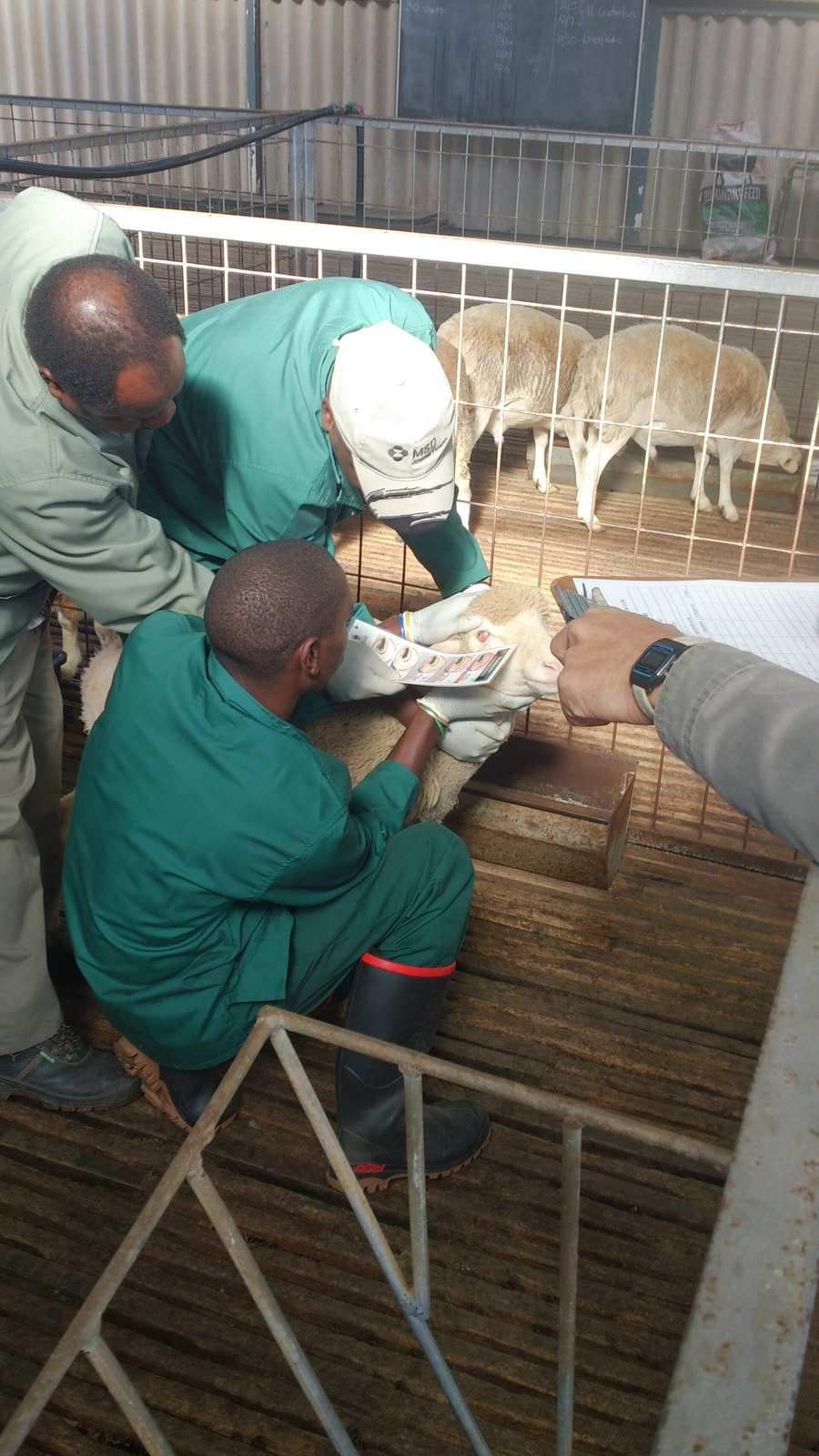
Livestock professionals checking a sheep's health in Malelane, South Africa
Animal-health work in Malelane, Mpumalanga, the lowveld where our story began. Photo: Burnmeister, Wikimedia Commons (CC BY-SA 3.0)
How it works

Buying and selling livestock
should not be an act of faith.

Live Stock removes the risk for both sides: the old mafisa trust, rebuilt for a marketplace.

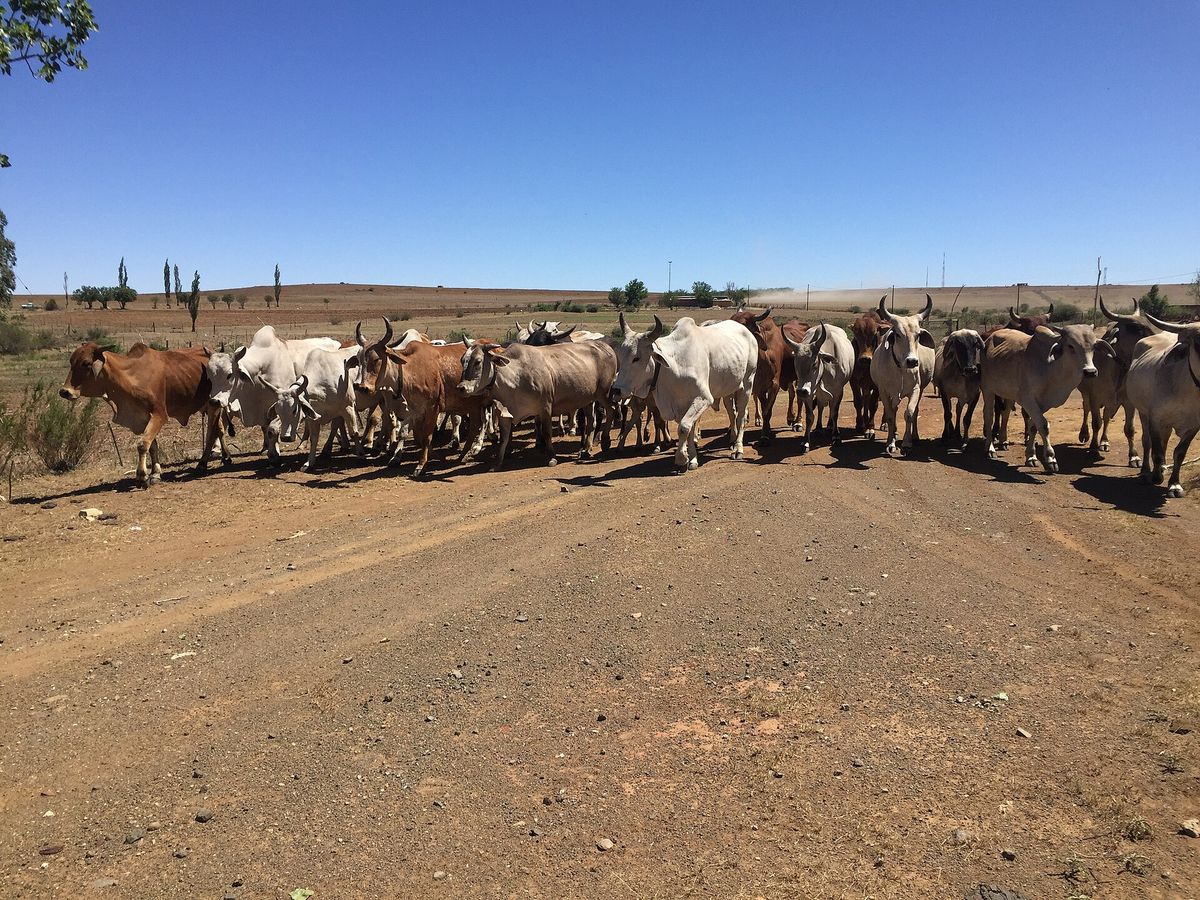
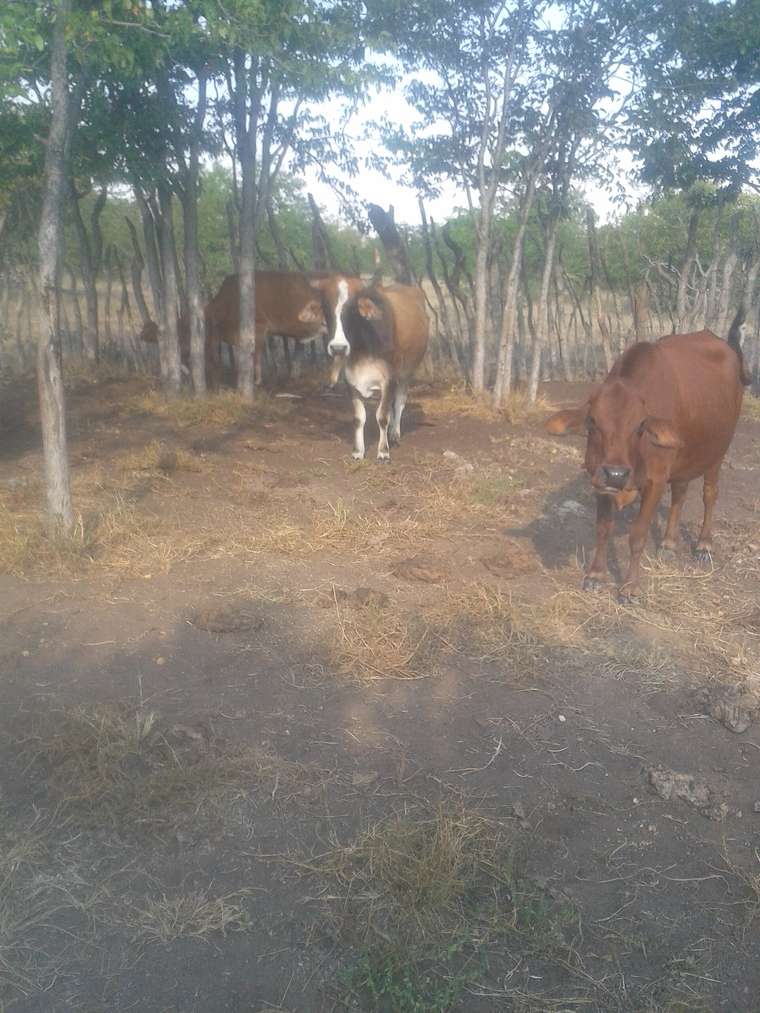
Cattle on a road between homes at Botshabelo, Free State
1

Verified people

Every seller is identity-verified before they can list, and every buyer before a meeting is arranged. Companies verify with their CIPC registration and buy in the business's name: feedlots, abattoirs and butcheries welcome.

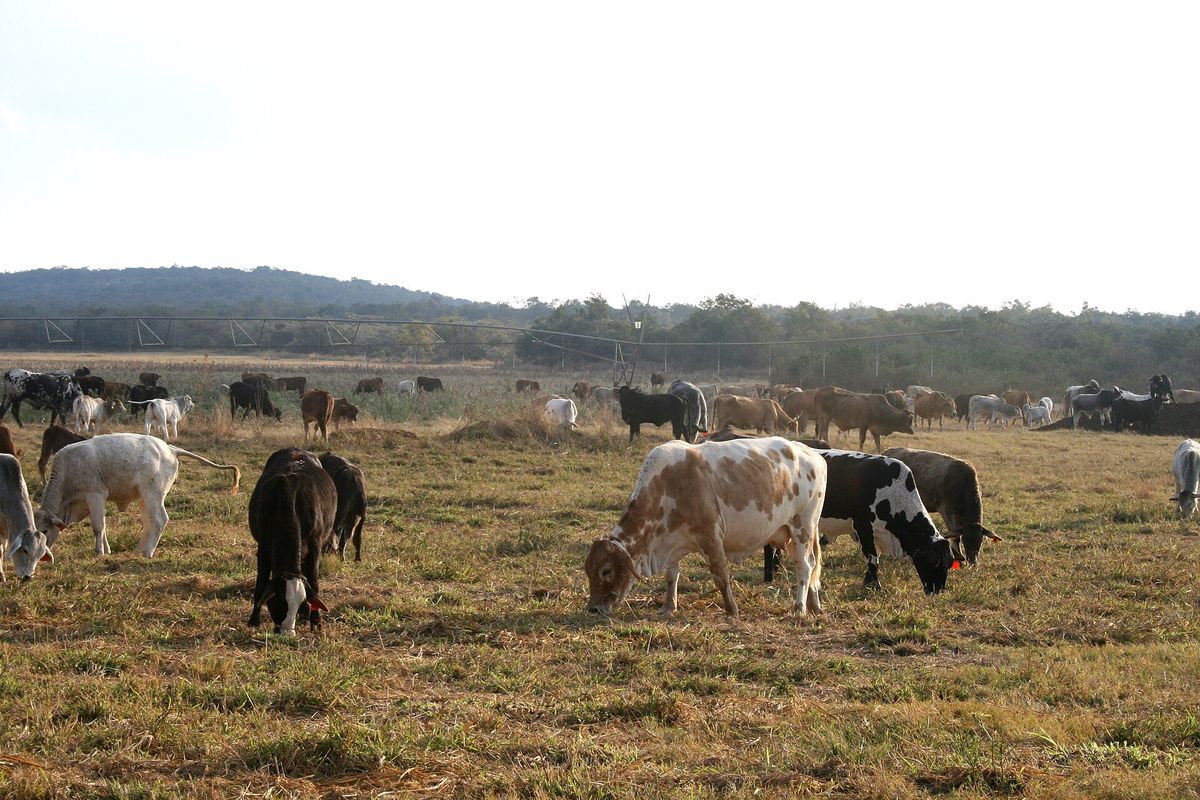
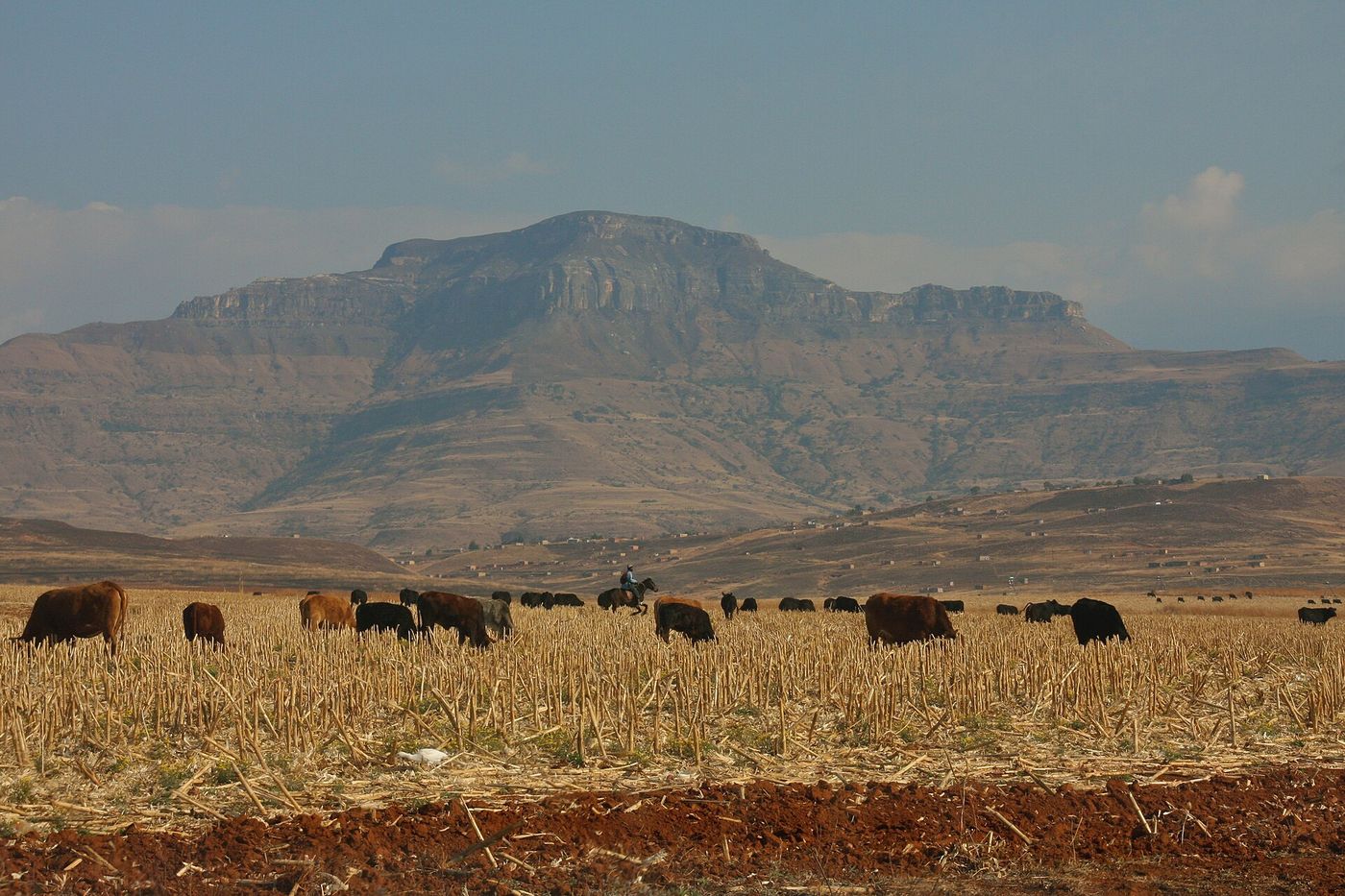
A commercial herd grazing on the Waterberg plateau, Limpopo
2

Secure payment

The buyer's money is held by a licensed escrow provider, never by Live Stock, the seller or a middleman. Inspect the animals at collection. Accept, and the farmer is paid after a 24-hour security hold. Reject, and your money comes back.

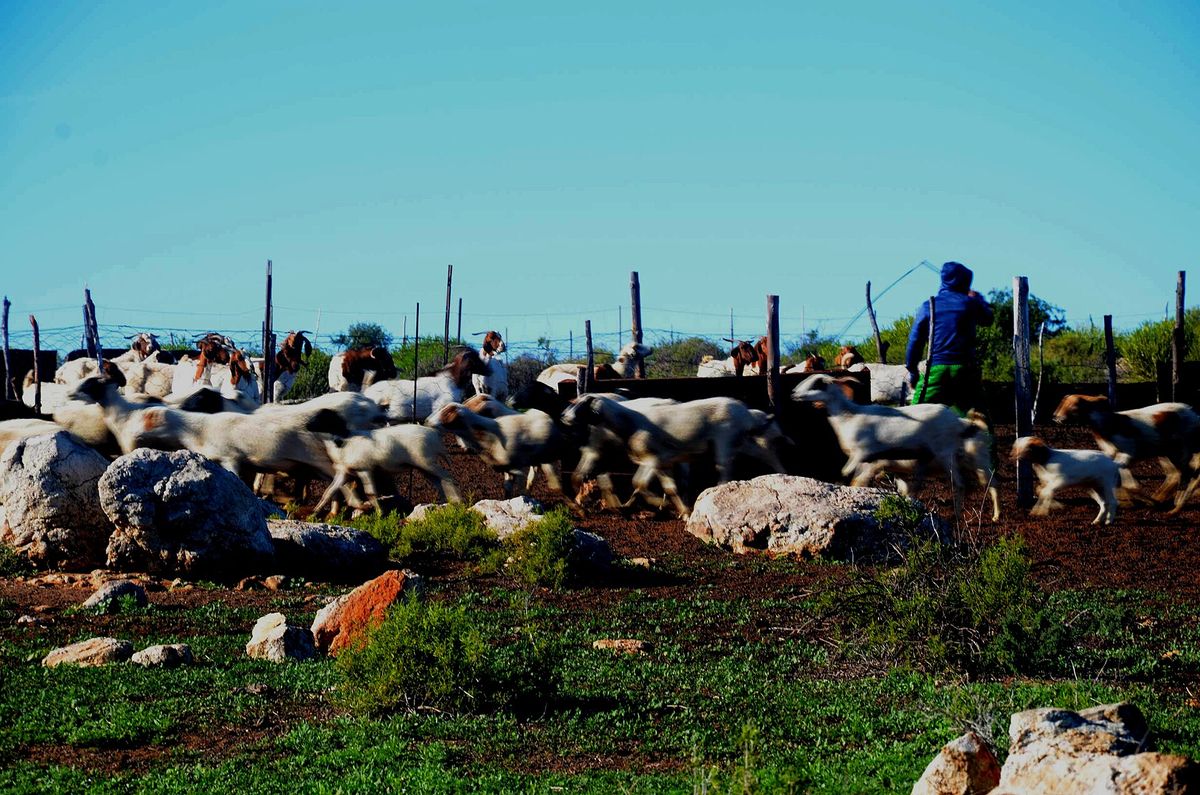
Goats and sheep leaving a kraal in Namaqualand
3

Papers with every animal

Health declaration, movement record, GPS provenance and a full paper trail, generated with every sale rather than promised by a stranger.

The journey

One deal, five safe steps.

Every Live Stock sale walks the same road, from the kraal to money in the bank, and nobody skips a step.

🛡️
1

Verify

Everyone is checked first. Sellers verify their identity before listing, companies verify with CIPC. No anonymous deals.

📷
2

List with proof

Photos of the animal from every side, taken on the spot with GPS. Fair price guidance from real market data.

🔒
3

Money into safekeeping

The buyer pays into escrow with a licensed partner. The animals are reserved. Nobody travels at risk.

🤝
4

Inspect and decide

Meet and inspect in person. Accept, and the farmer is paid to their bank after a 24-hour security hold. Reject, and the money returns in full.

📄
5

Papers with every animal

Health declaration, movement record and proof of sale, generated automatically.

97%
of the price stays with the farmer
40-50%
of SA's herd is locked out of the formal market
R0
at risk: money released only after inspection
7%
one transparent buyer fee, nothing hidden
Do the sum

What you keep, what you pay.

Move the sliders. The farmer's share and the buyer's total are the real numbers the app uses: a 3% seller commission and a 7% buyer service fee. Nothing else is taken.

Delivery, if the seller delivers, is priced per kilometre on top and shown before anyone commits. Listing is free. No monthly fees.
Sale priceR36 000
The farmer receives (97%)R34 920
The buyer pays (price + 7%)R38 520
Live Stock's shareR3 600
For buyers with volume

Post what you want. Let the supply come to you.

Feedlots, abattoirs, butcheries and traders post standing requests on the demand board: breed, weight, province, ongoing or once-off. Every verified farmer in the province is notified.

Companies trade in the company's name: CIPC-verified, with documents issued to the business, represented by your buyer.

Buying is transparent: one 7% service fee on the price, a fraction of the 20-40% speculator margin it replaces.

Buyers want: live requests
FEEDLOT BUYER (PTY) LTD ✓ Business verified
WANTED: Weaner calves, 8-9 months, 200-220 kg, ongoing
LimpopoCollect: buyerPosted today
HALAAL MEATS CO ✓ Business verified
WANTED: 20 lambs, 35-45 kg, certified slaughter-ready
GautengTransport: seller2 days left
YOUR COMPANY HERE ✓ Business verified
WANTED: your spec, your province, your terms
Open nowPost yours in the app
1

Verify your business

Sign up, then add your CIPC registration number. Our desk checks it once. From then on you buy in the company's name.

2

Post what you want

Breed, weight, age, how many, which province, once-off or ongoing. Every verified farmer in that province is told.

3

Farmers answer with real animals

Offers come with photos from every side, taken on the spot, and the seller's verification. You choose.

4

Pay into escrow, inspect, accept

Your money sits with the licensed escrow provider while you inspect. Accept, and the papers issue themselves. Reject, and it comes back.

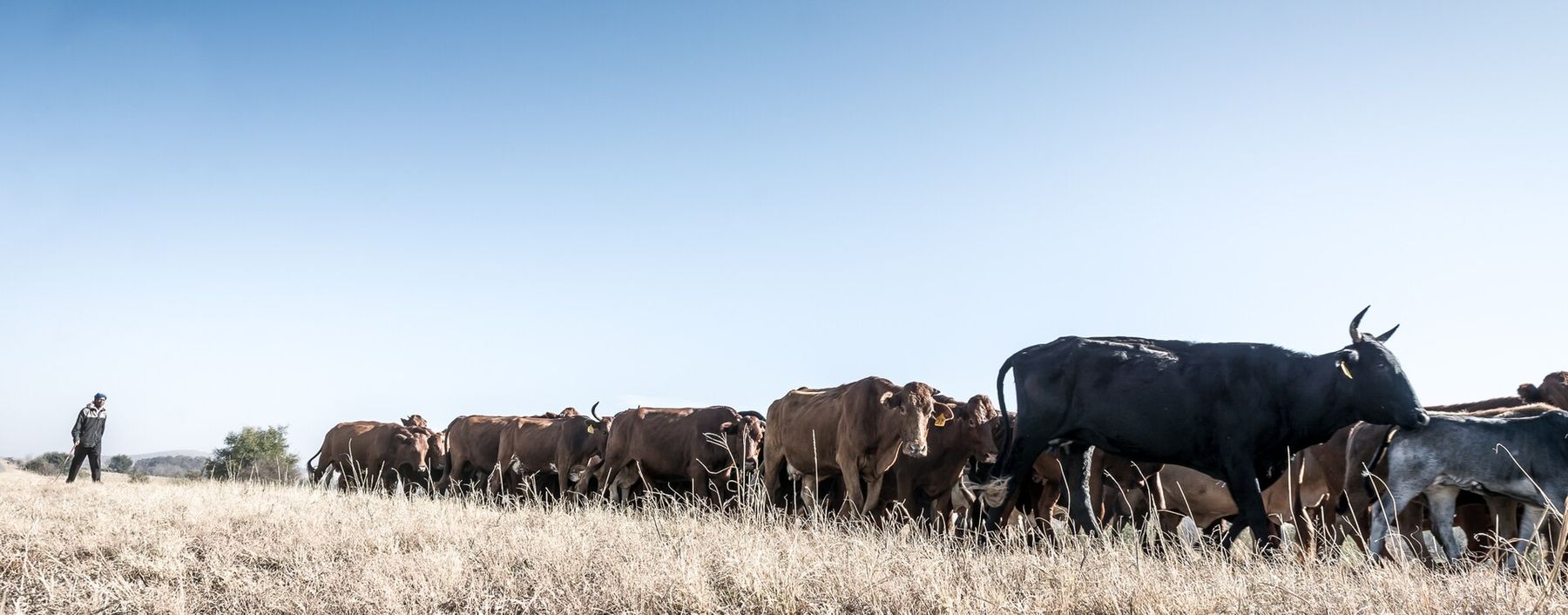
A herder walking cattle through winter grass in the Free State
Get the app

The market fits in your pocket.

Live Stock runs in the browser on any phone, so there is nothing to download from a store and nothing to update. Open the address once, put it on your home screen, and it works like any other app.

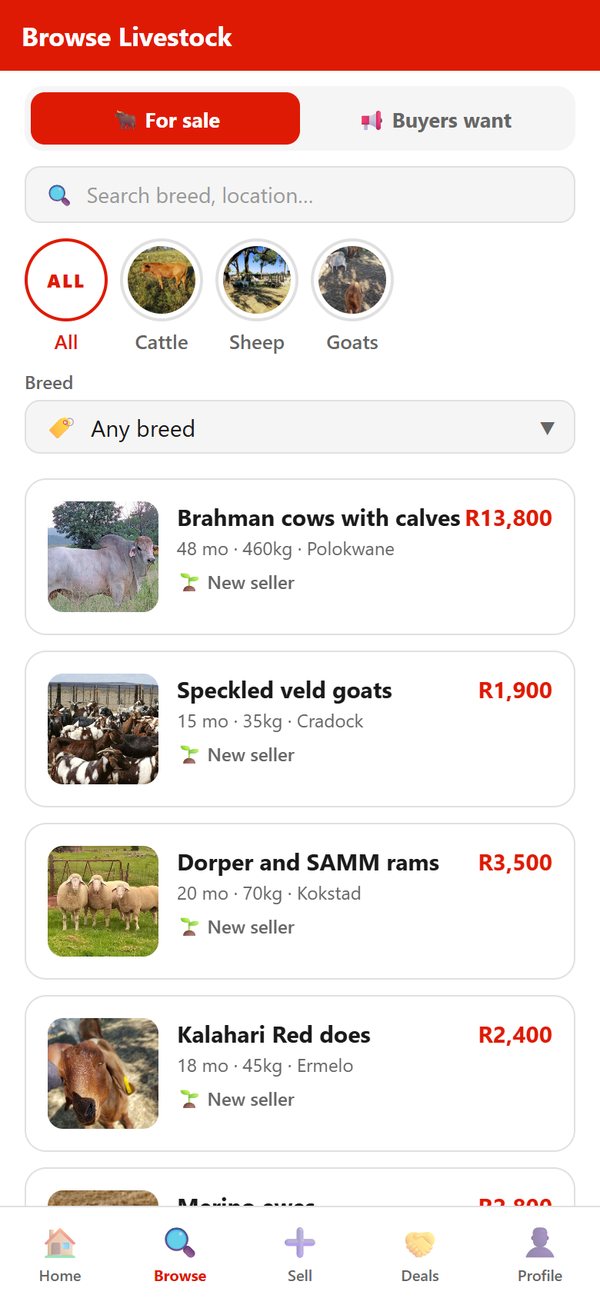
The Browse screen of the Live Stock app: cattle, sheep and goats for sale with prices
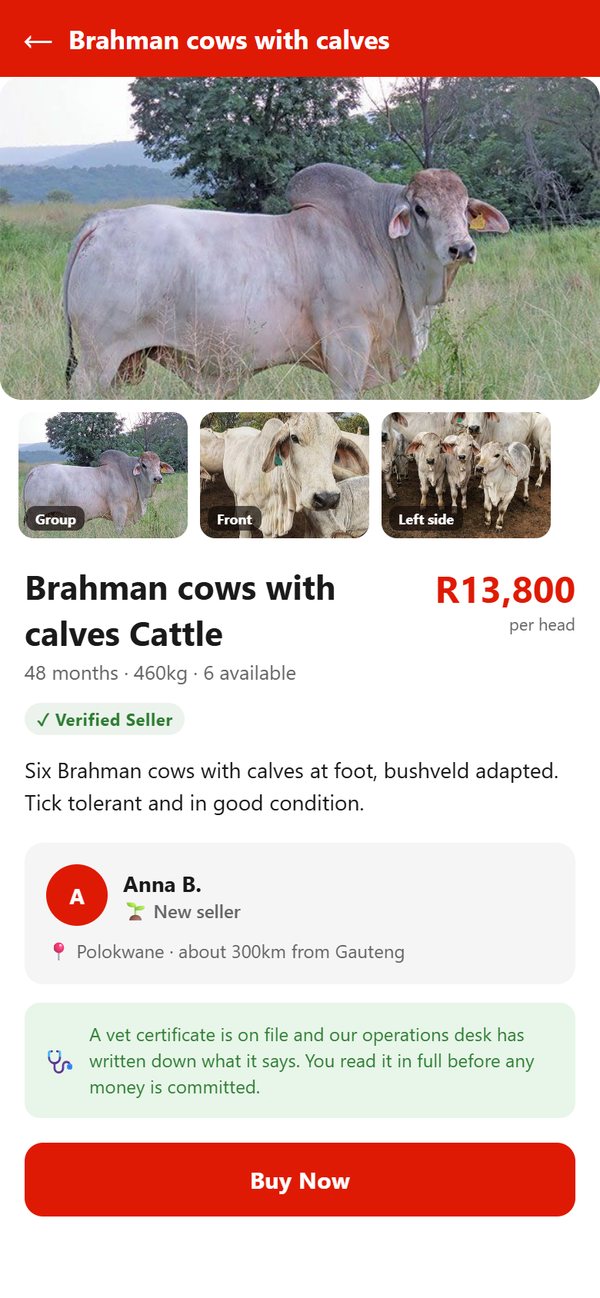
A listing in the Live Stock app: photos from every side, price per head, verified seller and the Buy Now button
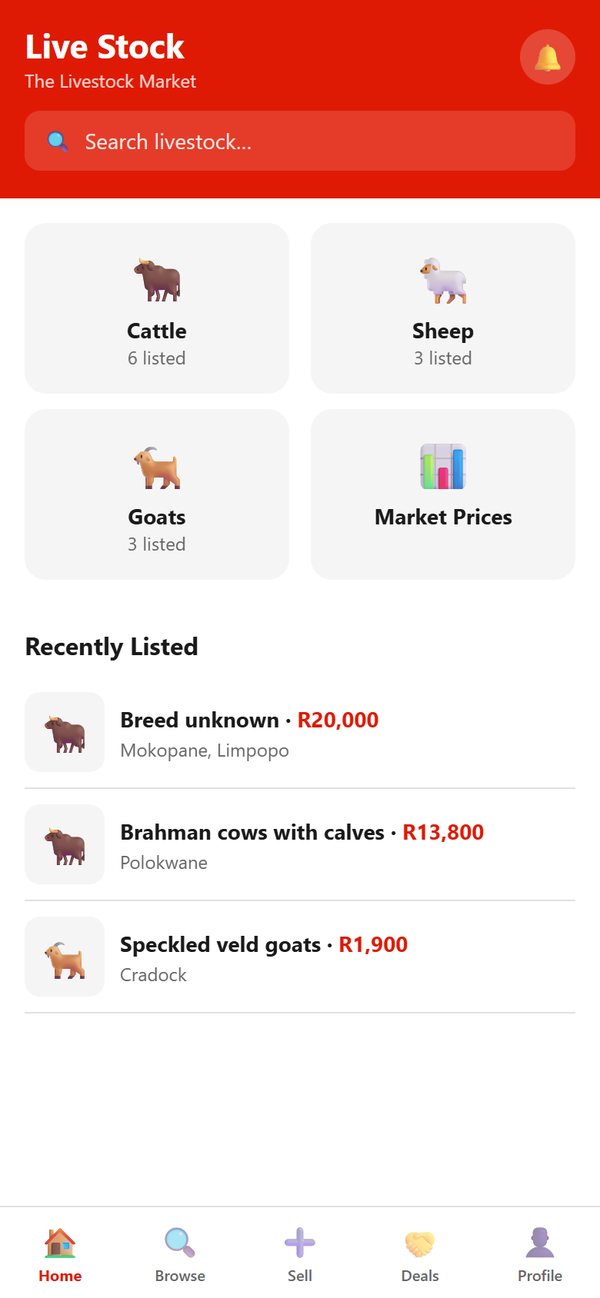
The home screen of the Live Stock app: cattle, sheep and goats by category, market prices and recent listings
app.livestockmarket.co.za
Android (Chrome)Open the address above. Tap the three dots at the top right, then Add to Home screen (on some phones it says Install app). Tap Add. The Live Stock icon appears with your other apps.
iPhone (Safari)Open the address above in Safari. Tap the Share button at the bottom, scroll and tap Add to Home Screen, then Add.
ComputerThe same address works in Chrome or Edge. Photos of animals must be taken with a phone camera, so the app offers Link my computer to pair your phone for that step.
Signing up takes a minuteYour phone number is your username. Choose a password and you are in. Selling needs a once-off check by a person at our desk: your ID, where the animals are kept, your brand mark and, if you have one, your vet certificate.
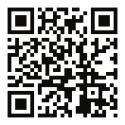
QR code for app.livestockmarket.co.za
Reading this on a computer? Point your phone's camera at the code and the market opens on your phone.
Open the market
Knowledge, shared

Lesaka

le·sa·ka
Lesaka (Sepulana): the kraal, the enclosure where the herd gathers for the night, counted and kept safe.

That is what this space is for. Articles, market intelligence and practical know-how for the people who raise, buy and move South Africa's livestock, gathered here, kept safe, and shared free with everyone. The first three pieces are here. More follow as the market grows.

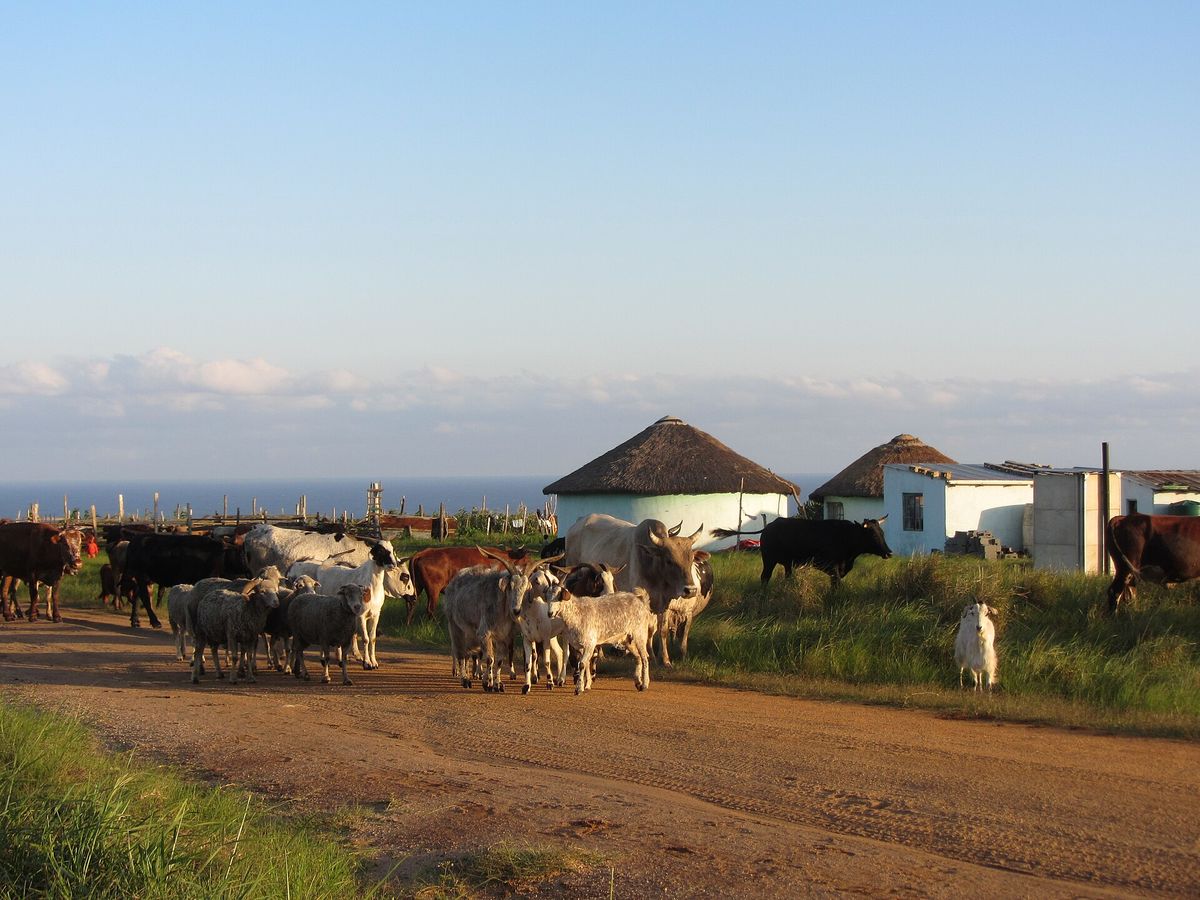
Cows coming home to a homestead in Pondoland, Eastern Cape
Markets

The missing half of the national herd, and what it means for prices

Nearly half of South Africa's cattle never reach the formal market. Where those animals go instead, and who pays the difference.

Read the article →
A young farmer's cattle in a kraal in Southern Africa
Heritage

Mafisa: the trust system Sotho-Tswana families traded by, rebuilt as an app

Long before escrow had a name, whole herds were loaned on a handshake across Sotho-Tswana country. What the old custom teaches a modern marketplace.

Read the article →
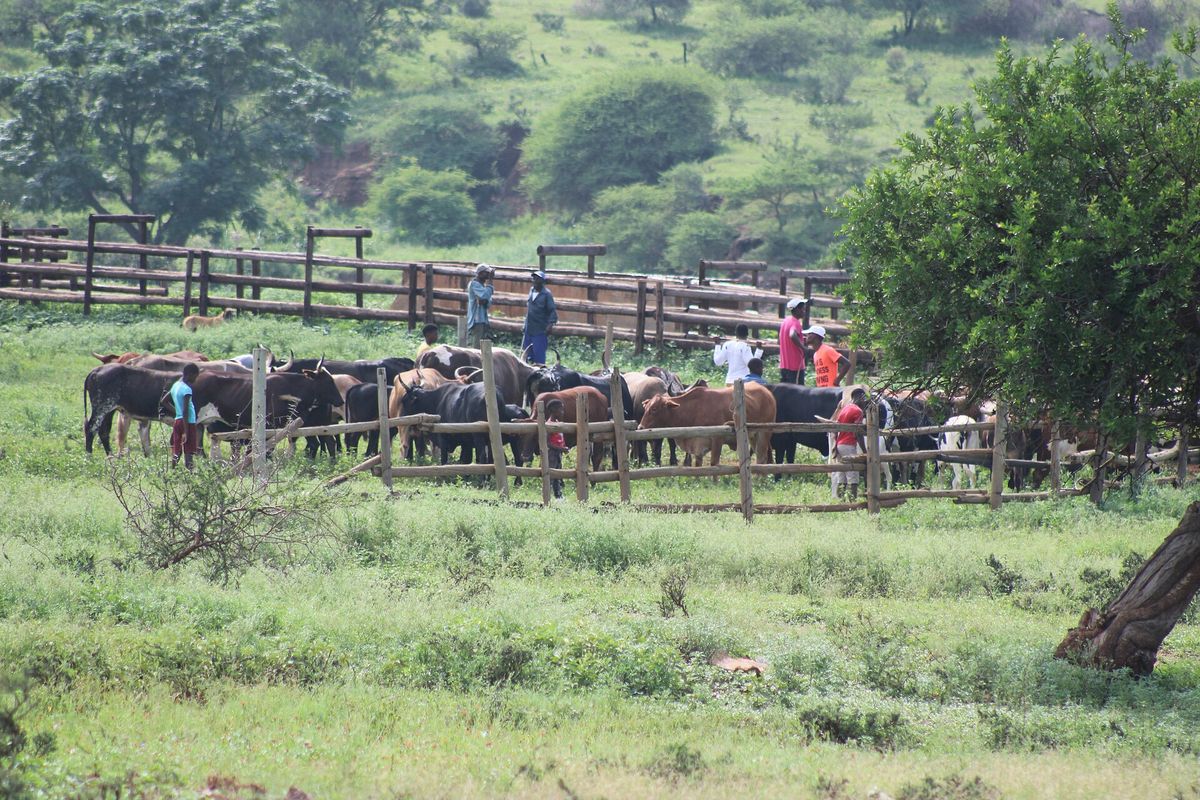
Cattle in a crush at a community dip in KwaZulu-Natal
Farming practice

Movement paperwork after FMD: what serious buyers now demand

Disease outbreaks changed the rules. The documents your animals need to travel with, ready before the buyer asks.

Read the article →

Practical guides, free: How to sell safely to a stranger · The papers an animal needs to travel · Registering your brand mark · The 28-day isolation habit

From the kraal

Tell us what you think.

We opened on 10 September 2026 and we are listening. If something in the app is hard, slow, wrong or missing, say so here. A person reads every message, and the market gets better because you spoke.
Thank you. If your email app opened, press Send and it reaches us. If nothing opened, email admin@livestockmarket.co.za or WhatsApp 074 334 0717.
The first farmers and buyers are on the market now. Their words, unedited, will appear here as they come in.
Live Stock, September 2026
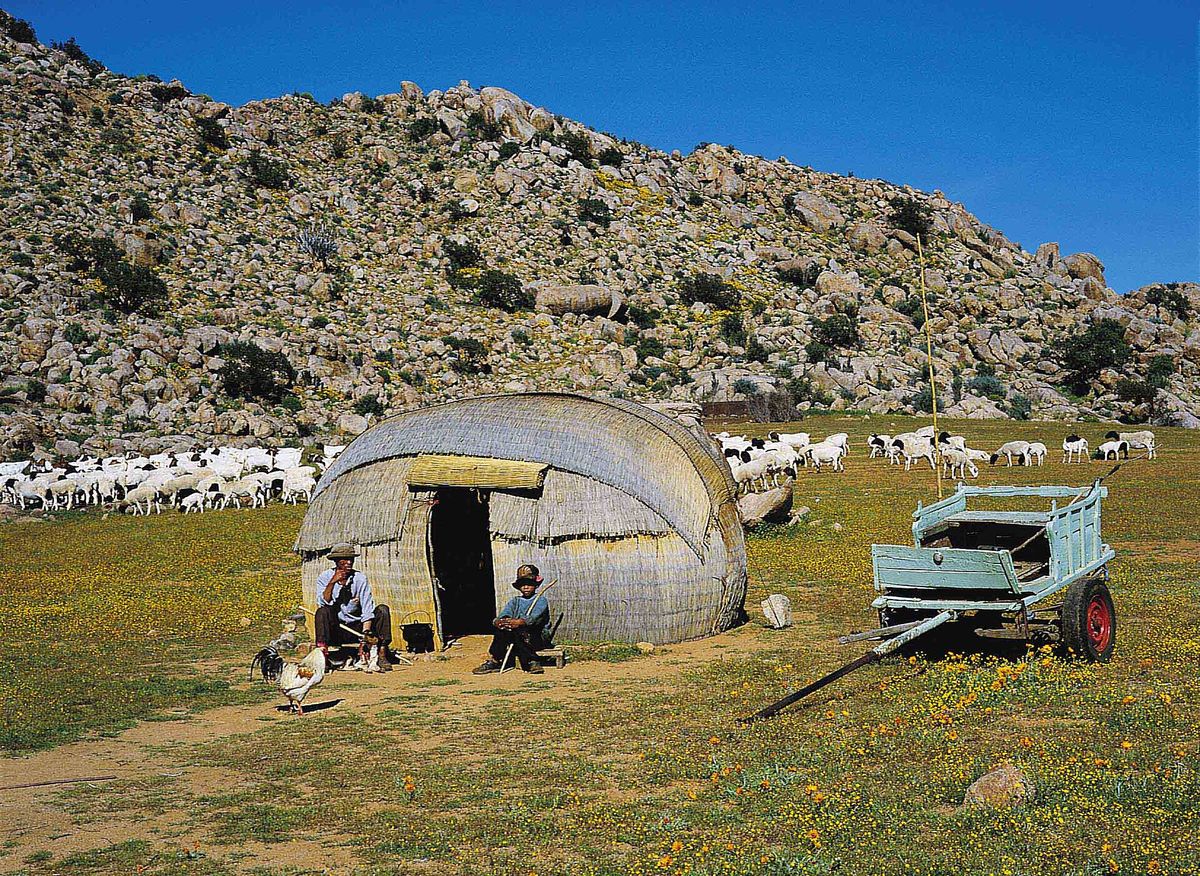
A herding family with their sheep and goats beside a reed hut in the Northern Cape
Herders of the Northern Cape. Photo: South African Tourism, Wikimedia Commons (CC BY 2.0)
Plain answers

Questions people ask first.

Who holds the buyer's money?
A licensed escrow provider, TradeSafe. Not Live Stock, not the seller, not a middleman. The buyer pays on TradeSafe's secure page, the money sits there while the buyer travels and inspects, and it is released to the farmer only after the buyer accepts. If the deal falls through, the livestock money goes back to the buyer.
What does it cost?
Listing is free. When a deal completes, the farmer pays a 3% commission and keeps 97%. The buyer pays a 7% service fee on the price. That is all. If the seller delivers, delivery is priced per kilometre and shown before anyone commits. Try the calculator.
Is the market open everywhere in South Africa?
Yes. Anyone in any province can sign up, list and buy. Distances are shown on every listing, and the seller's delivery price, where offered, is worked out on the road distance to you.
Is there a limit on a deal?
While we are new, a single deal is up to 3 animals or R40 000 all in. It keeps every early deal inside what we can personally stand behind, and it lifts as the market grows.
What if the animals are not what was listed?
You inspect before you accept. Every listing carries photos from every side, taken on the spot, and the seller's vet certificate is read by our desk and written onto the listing. If what you find does not match, reject, and your money comes back. If the certificate at the meeting contradicts what the listing said, you can walk away and keep your money.
Which papers travel with the animals?
A health declaration, a movement record, proof of sale and the seller's registered brand mark, generated on every completed deal. For what the law asks of you when animals move, read the papers an animal needs to travel and Movement paperwork after FMD.
How do I get paid as a farmer?
Straight to the bank account you gave at verification, released by the escrow provider after the buyer accepts and a 24-hour security hold. Allow your bank's normal clearing time.
Who can see my phone number and my farm?
Nobody, until a meeting is actually agreed. Your number and the exact meeting place are shared with the other party only once both sides have confirmed the meeting, and every number on the market has been confirmed by SMS first.
Open now

The market is open.

Free to list. Checked by a person. Money held by a licensed escrow provider until you have seen the animals. From the kraal to the bank, safely.

Get the app
Thaba ya Moholoholo, "the great one", watches over the lowveld where our story began
In loving memory of Orearabile. His name means "He has answered us."
May this work answer in his name.